People who cannot get up in the morning usually assume they have a character problem. They think everyone else has more discipline. That framing is wrong and it is also useless, because you cannot apply discipline to a brain region that is not switched on yet. There are four separate things going on, they stack, and each one has a different fix.
1. Sleep inertia is a real physiological state
When you wake, your brain does not come online all at once. Blood flow returns to different regions at different rates, and the prefrontal cortex is one of the slowest. That is the part responsible for planning, self control, weighing consequences and overriding impulses. It can take twenty to thirty minutes to reach normal function, and in some cases considerably longer.
This is why the argument you have with yourself at 6am is so unfair. You are asking the part of your brain that handles long term goals to compete with the part that handles immediate comfort, at the exact moment the first one is offline and the second one is working perfectly. You are not losing an argument. You are not present for it.
Sleep inertia is worse when you are woken out of deep slow wave sleep, which is more likely if you are sleep deprived or waking at the wrong point in a cycle. It is reduced by light, by movement, by being upright, and by a rising heart rate. Notice that none of those are decisions. They are physical inputs, which is why the practical fixes further down are all about environment rather than resolve.
2. Sleep debt makes everything else worse
Most adults need somewhere between seven and nine hours. If you are consistently getting six, you are running a deficit that accumulates across the week. Sleep debt deepens the sleep you do get, which means your alarm is more likely to catch you mid deep sleep, which means worse inertia, which means more snoozing, which means less sleep. The loop is self reinforcing.
The uncomfortable part is that no alarm, technique or app fixes this. If you go to bed at one and get up at six, you will feel terrible, and you should. The only fix is more sleep, and the only reliable way to get more sleep is to move bedtime, because you cannot move the alarm.
Be honest with yourself about where the hours go. For most people it is not work. It is the ninety minutes after they intended to go to bed, spent on a screen, because the evening felt too short.
3. Circadian misalignment
Your body runs an internal clock set largely by light exposure. It governs core temperature, cortisol and melatonin release, and it decides when you feel sleepy and when you feel alert. If your clock is set two hours later than your schedule requires, then getting up at seven feels like getting up at five, and it will keep feeling like that indefinitely because your clock does not care what your calendar says.
Late chronotypes get this badly. So does anyone who spends the day indoors under weak artificial light and the evening under bright screens, which is a fairly good description of modern life. Weak morning light and strong evening light together push the clock later.
Shifting it back is slow. You need bright light in the first hour after waking, ideally outdoors, and dimmer light in the two hours before bed. Consistency matters more than timing: a fixed wake time seven days a week does more to stabilise your clock than anything else you can do, including going to bed early. Lie ins at the weekend undo the week's progress, which is why Monday feels like jet lag. It effectively is.
4. Snooze fragments the sleep you have left
Snoozing feels like it is buying you rest. It is not. Nine minutes is not long enough to complete a sleep cycle, but it is long enough to begin descending back towards deep sleep. When the alarm goes again, you are pulled out of a deeper stage than the first time. Repeat four times and you have spent forty minutes producing four fresh doses of sleep inertia and zero minutes of restorative sleep.
This is why people who snooze for an hour often feel worse than people who get up on the first alarm after less total sleep. The fragmentation costs more than the extra time is worth.
The snooze button is not a compromise between sleeping and waking. It is the worst version of both.
There is a second problem. Every time you snooze, you are practising the act of dismissing your alarm while asleep. It becomes automatic, and once it is automatic you will do it without ever forming a memory of it. People who swear they slept through five alarms have usually turned them all off.
What actually helps
These are ordered by how much difference they tend to make, not by how easy they are.
Fix the total first
Work backwards from your required wake time and set a bedtime that gives you seven and a half to eight hours in bed. Treat it as fixed for two weeks before you judge anything else. Almost everyone who says nothing works has never actually tested this.
Keep the wake time constant
Same time every day, including weekends, within about thirty minutes. This is the highest leverage circadian intervention available and it costs nothing.
Get light early
Outdoors within the first thirty minutes if you can, for ten minutes or more. On a dark winter morning, a bright lamp or a sunrise lamp is a reasonable substitute. Light is the signal that ends melatonin production, and no amount of willpower substitutes for it.
Cut caffeine off in the early afternoon
Caffeine has a half life of around five to six hours, so a 4pm coffee is still meaningfully present at 10pm. It does not always stop you falling asleep. It reliably reduces the depth of the sleep you get, which shows up the next morning as grogginess you then treat with more coffee.
Remove the decision
Given that your prefrontal cortex is offline at the moment of the alarm, the sane strategy is to not require a decision at all. That means designing your morning so the default path leads out of bed. Phone across the room. Clothes laid out. Nothing to negotiate.
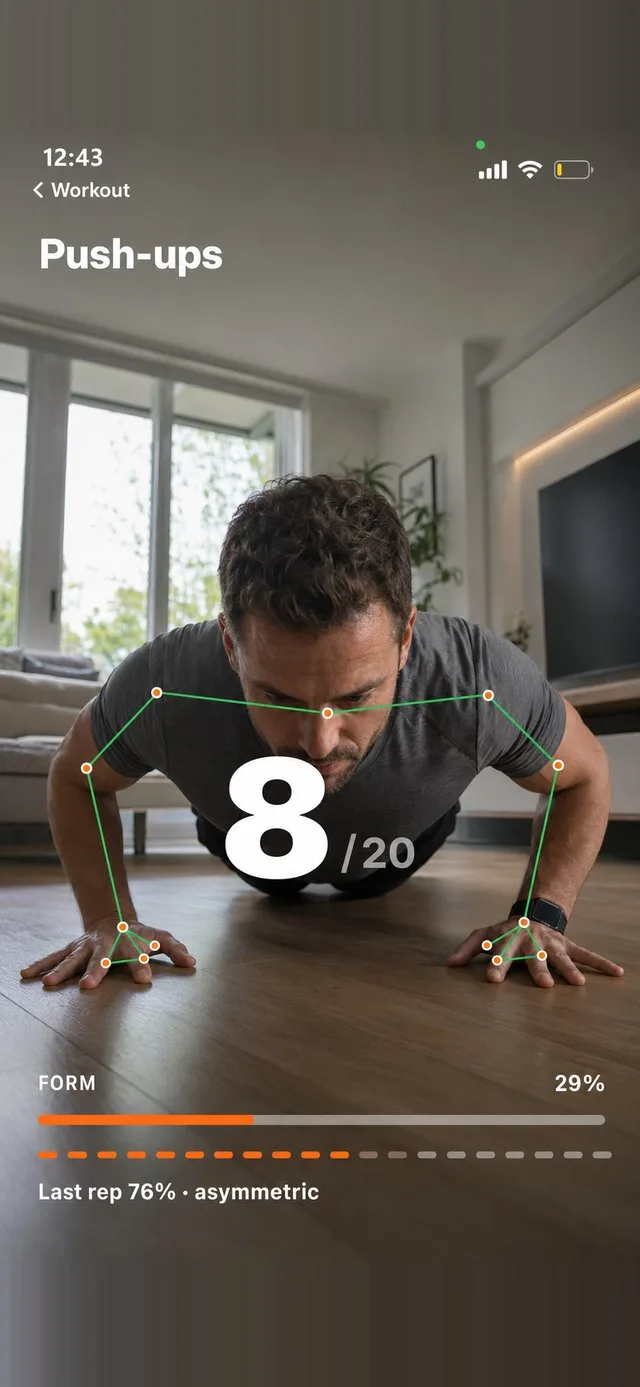
An alarm with a real dismissal cost belongs in the same category. This is the idea behind FitClock: the alarm does not stop until you have completed a set of exercise, with the camera counting reps through on device pose detection that scores each one for depth, tempo and form, so half efforts do not register. By the time you have finished a set of squats or a plank hold, you are upright, your heart rate is up and inertia is largely gone. The decision was never made, because it was never offered.
It rings through Silent mode and Focus, which closes the most common loophole, and the eight week ramp raises your rep target gradually rather than demanding twenty press ups from someone who cannot do five. If the exercise part is the sticking point for you, the honest discussion of that is in no motivation to work out in the morning.
Do not skip the medical explanation
If you are getting eight hours consistently, keeping a stable schedule, and still cannot function in the morning or find yourself exhausted through the day, stop optimising your alarm and see a doctor. Sleep apnoea, thyroid problems, anaemia, depression, restless legs and narcolepsy all present as being unable to wake up, and all of them are things an app cannot touch. Persistent unexplained exhaustion is a medical symptom, not a discipline failure.
For everyone else, the sequence is simple. Get enough sleep, keep the wake time fixed, get light early, and stop asking a half awake brain to make a decision it is not equipped to make. If you also want the tactical version of this, we have nine specific things that stop you hitting snooze.
Stop negotiating at 6am
FitClock takes the decision away by refusing to switch off until you have moved.
Get FitClock