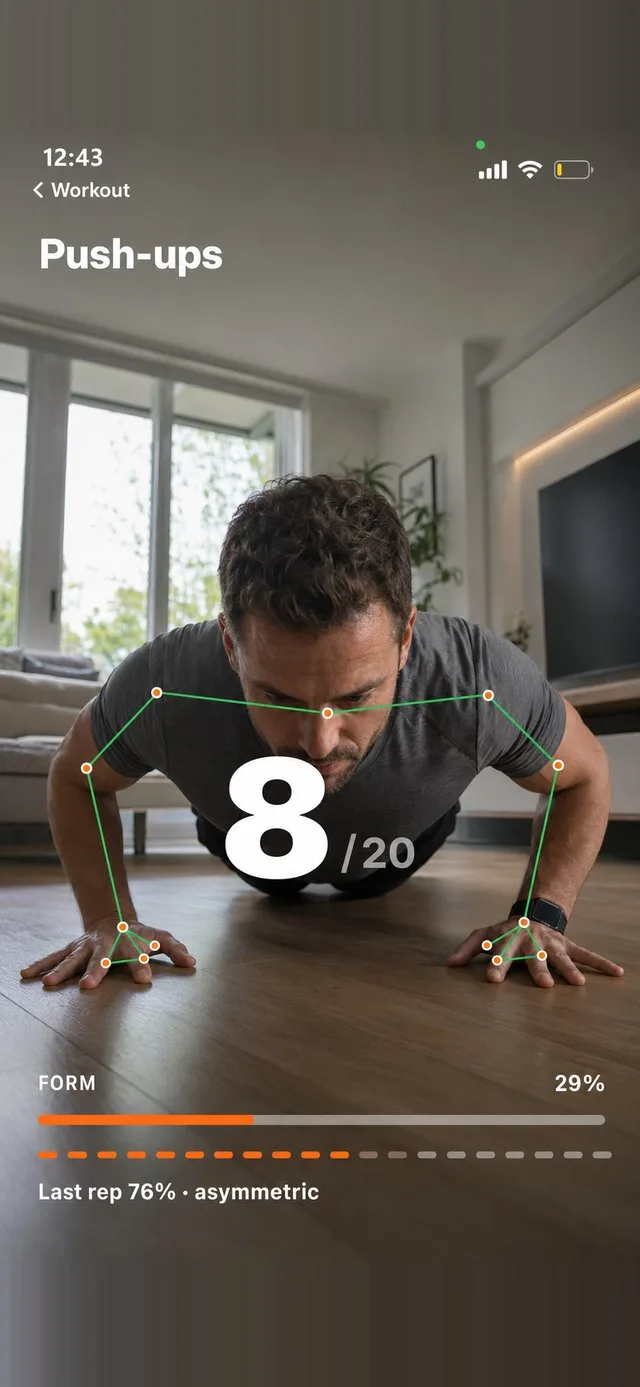
You are not short of motivation. You had plenty of it last night, which is why the alarm is set for six and the kit is on the chair. What you are short of is motivation at the moment it is required, which is a different resource entirely and one that nobody has reliable access to.
This is worth being precise about, because "I have no motivation" gets treated as a character problem when it is really a timing problem. The version of you that plans the workout and the version of you that has to perform it are in completely different states. One is warm, alert, thinking about the future and slightly pleased with itself. The other has been conscious for four seconds, has a core temperature at its daily low, and has no interest in anything beyond the next ninety minutes of unconsciousness. Asking the second one to honour the first one's commitments is a design flaw.
Motivation is an input you cannot control
Think of motivation as a variable input rather than a fuel you can top up. It fluctuates with sleep quality, stress, whether you are ill, whether you argued with someone yesterday, the weather, and a dozen other things you do not control. Some mornings it is high. Most mornings it is not. If your workout only happens when the input is high, you are running a system with an unreliable dependency, and it will fail at exactly the times you most needed it to hold.
The people who train consistently in the morning are not people with permanently high motivation. They are people who have removed motivation from the critical path. The workout happens because of what surrounds it, not because they woke up wanting it. Most of them will tell you they still do not want it. They just no longer treat wanting it as a prerequisite.
Consistency is not the reward for having motivation. It is the thing you build so that you stop needing any.
Implementation intentions: decide once, in advance
The single most researched intervention here is the implementation intention, which is a formal name for a very plain idea: specify in advance exactly when, where and how the behaviour will happen. Not "I will exercise more". Instead: "When my alarm goes at 06:15, I will get out of bed and do twenty squats on the bedroom floor before I touch my phone."
The mechanism is that you shift the decision from the moment of action to a moment when you are capable of deciding well. At 6am you are terrible at deciding. Last Tuesday afternoon you were fine. So make the decision on Tuesday afternoon and let the morning be pure execution. There is nothing to negotiate, because the negotiation already happened and you were not invited.
Be specific about the cue. Vague intentions fail because the trigger never clearly arrives. "In the morning" is not a cue. "The second the alarm sounds" is. The tighter the link between a specific trigger and a specific action, the less room there is for the deliberation that always ends with you back in bed.
Minimum viable sets: make the entry price trivial
The other reliable lever is shrinking the task until refusing it becomes absurd. Most people fail at morning exercise because the thing they have committed to is a forty minute session, and forty minutes is an enormous ask of a body that has been awake for eight seconds. The brain does the sum instantly, concludes it is not worth it, and hits snooze.
Instead, define a minimum that is almost embarrassingly small. Ten press-ups. Twenty squats. A thirty second plank. The rule is that the minimum is non-negotiable and everything above it is optional. On good days you do far more. On bad days you do exactly the minimum and it still counts, which is the important part, because a minimum you actually hit on a bad morning is worth more than a full session you skip.
This is roughly how FitClock is set up. The alarm asks for one mission, one exercise, a small target that takes a minute or two. If you want to keep going afterwards, nothing stops you. But the thing standing between you and switching the alarm off is small enough that arguing with it takes longer than doing it.
Let the minimum grow without you noticing
There is an obvious objection to tiny minimums, which is that twenty squats a day is not a training programme. True, but it is the wrong comparison. The real comparison is against zero, which is what you are currently doing. And the minimum does not have to stay fixed. FitClock ramps your rep target over eight weeks, so what starts as a formality in week one is a genuine set by week eight, and you never had to consciously decide to increase it.
Streaks work because losing hurts more than winning
Streak counters look like a cheap gamification trick, and in a lot of apps they are. But the underlying psychology is real, and it is not about the reward. It is about loss aversion. People consistently work harder to avoid losing something they already hold than to gain something equivalent they do not.
A streak converts your habit into a possession. At day three the counter is meaningless. At day forty it is an object you own, and the prospect of watching it reset to zero is genuinely unpleasant. That unpleasantness is doing useful work at 6am, because it gives the half-asleep version of you a reason to move that does not depend on caring about fitness. It only has to care about not breaking the number.
Two practical rules. First, never break the streak twice. One missed day is noise; two consecutive missed days is the beginning of a new pattern, and the psychological cost of restarting climbs quickly after that. Second, keep the streak attached to the minimum, not to a full session. If your streak requires forty minutes, you will break it the first bad week. If it requires twenty squats, you can protect it through illness, travel and a terrible night's sleep.
Why "just start" is not empty advice
"Just start" sounds like the sort of thing said by people who have never struggled with this. It survives because it describes something specific about how motivation actually behaves: it tends to follow action rather than precede it. The reluctance you feel is anticipatory. It is generated by imagining the task, and it typically dissolves somewhere in the first sixty seconds of doing it.
Almost nobody is thirty seconds into a set of jumping jacks and still wishing they had stayed in bed. The dread lives entirely in the gap before the first rep. So the tactical goal is not to feel motivated, it is to compress that gap to nothing. Which is exactly what a physical alarm does: it removes the gap by making the first rep the only route to silence.
If mornings feel impossible before you have even reached the exercise question, the underlying problem may be the wake-up rather than the workout, and our piece on why you cannot wake up in the morning deals with that end of it.
Put it together
- Write the implementation intention down with a specific time, place and action. One sentence.
- Set the minimum so low it feels like cheating. It is not cheating, it is the floor.
- Track the streak against the floor, not against your ambitions.
- Remove the decision from the morning entirely. Automate the trigger so nothing depends on how you feel.
- Let the target rise slowly, on a schedule, without asking your opinion.
None of this requires you to become a person who enjoys 6am. You can carry on disliking it indefinitely. The point of a system is that your feelings about it stop being load-bearing, and the workout happens either way. You can read more about how the app implements this on the FitClock homepage.
Build the system, skip the willpower
FitClock turns your morning workout into the only way to switch the alarm off.
Get FitClock